How to Start Investing with $500: A Beginner’s Complete Guide
You do not need thousands of dollars to start investing.
If you have $500 available, the more important question is not “What stock can make me rich?” It is “How can I use this $500 to build a sensible investing habit?”
For a beginner, $500 can be enough to open an investment account, buy a diversified investment such as an ETF or index fund where available, and start learning how markets work.
The key is to avoid treating your first $500 like a lottery ticket. Investing involves risk, prices can fall, and there is no guaranteed return. Your goal should be to build a process that you can continue with another $50, $100 or $200 each month. How to Make Money with Survey Junkie
This guide explains how to start investing with $500 in the USA and UK, what to consider before investing, how diversification works, what fees to watch, and how your initial $500 could grow over time.
Can You Really Start Investing With $500?
Yes.
Many investments can be purchased with relatively small amounts, particularly when a brokerage platform supports fractional shares or low minimum investments.
However, having $500 available does not automatically mean that all of it should go into the stock market.
Before investing, consider:
- Do you have an emergency fund?
- Do you have high-interest debt?
- Will you need the $500 soon?
- What is your investment time horizon?
- How much market volatility can you tolerate?
- Are you investing for retirement, wealth building, or another goal?
If the money may be needed for an emergency or a near-term expense, keeping it in an appropriate savings vehicle may make more sense than exposing it to stock-market fluctuations.
How to Start Investing With $500
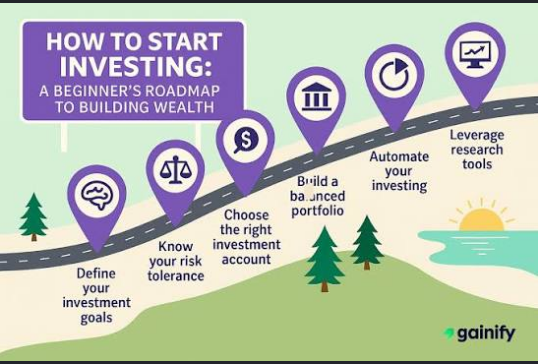
Step 1: Decide What the $500 Is For
Start with a goal.
For example:
| Goal | Possible Time Horizon | General Consideration |
|---|---|---|
| Emergency savings | Short term | Cash/savings may be more appropriate |
| Buying a car | 1–3 years | Avoid taking unnecessary market risk |
| Home deposit | Several years | Asset allocation depends on timeframe |
| Retirement | Decades | Long-term diversified investing may be suitable |
| General wealth building | 5+ years | Diversified investments may be considered |
There is no single investment allocation that works for everyone. Your time horizon and risk tolerance matter.
Step 2: Choose the Right Account
Your account and tax treatment can be just as important as the investment itself.
USA
U.S. investors may use different types of accounts depending on their circumstances, including:
- Taxable brokerage accounts
- Traditional IRAs
- Roth IRAs
- Employer-sponsored retirement plans such as 401(k)s
For 2026, the IRS says the combined annual contribution limit for traditional and Roth IRAs is $7,500, or $8,600 for people age 50 or older, subject to the applicable rules and compensation limits.
If your employer offers a retirement plan with matching contributions, understand the matching rules before deciding where additional money should go.
UK
UK investors may consider a Stocks and Shares ISA for eligible investments.
The UK ISA allowance is £20,000 per tax year, although the rules and allowances can change. Money invested through an ISA can receive tax advantages, subject to the ISA rules. How to Start Investing with $500
The right account depends on your circumstances, tax position, goals and eligibility.
Step 3: Pick a Regulated Investment Platform
When selecting a broker or investment platform, look beyond the advertising.
Check:
- Regulation
- Account fees
- Trading fees
- Fund expense ratios
- Foreign-exchange charges
- Withdrawal fees
- Minimum investment requirements
- Fractional-share availability
- Available ETFs and funds
- Customer support
- Security features
A platform advertising “zero commission” does not necessarily mean investing is completely free. Investment products can have ongoing expenses and other costs.

Step 4: Choose What to Invest In
A beginner generally has several broad choices.
Option 1: Broad-Market ETFs
An ETF can hold a collection of investments rather than one company.
For example, a broad-market fund may provide exposure to many companies across an index or market.
This can make diversification easier than selecting individual stocks.
Option 2: Index Funds
Index funds are designed to track a particular market index rather than actively selecting investments in an attempt to outperform it.
They can be useful for investors who want a relatively straightforward long-term strategy.
Option 3: Individual Stocks
You can use some of your $500 to buy individual companies, depending on your brokerage and share-price requirements.
However, buying one or two companies creates concentration risk.
A company can experience falling sales, management problems, regulatory issues, competitive pressure or other events that negatively affect its stock.
Option 4: Bonds or Bond Funds
Bonds and bond funds can play a role in some portfolios, particularly where an investor wants exposure beyond stocks.
However, bond investments also involve risks, including interest-rate and credit risk.
A Simple $500 Beginner Investment Example
There is no universal allocation that every beginner should follow.
Instead, think about the purpose of the example.
For an investor with a long-term horizon who has already handled emergency savings and expensive debt, one possible educational example could be:
| Investment | Example Amount | Purpose |
|---|---|---|
| Broad diversified equity fund | $400 | Core long-term growth exposure |
| Bond/cash-oriented investment | $50 | Additional diversification or stability |
| Learning/research allocation | $50 | Small amount for experimenting |
This is not a personalized investment recommendation. A different allocation may be appropriate depending on your age, goals, risk tolerance, tax situation and time horizon.
Another simple approach is to put the entire $500 into one diversified fund rather than splitting a small portfolio among many overlapping funds.
The important point is to understand what you own.
What Does $500 Become Over Time?
Compounding is one reason starting early can matter.
For illustration, suppose someone invests $500 and earns an average hypothetical 7% annual return, with no additional contributions.
The approximate values would be:
| Time | Hypothetical Value |
|---|---|
| 1 year | $535 |
| 5 years | $701 |
| 10 years | $984 |
| 20 years | $1,935 |
| 30 years | $3,806 |
These numbers are mathematical illustrations, not a prediction or guaranteed investment return.
Real investments fluctuate. Some years may produce gains, while others may produce losses.
The bigger lesson is what happens when you continue contributing.
For example, if you started with $500 and then added $100 every month, the amount invested over 10 years would be $12,500 before considering investment returns.
Time plus regular contributions can therefore matter much more than trying to turn the first $500 into a huge amount quickly.
Why Diversification Matters
Imagine putting your entire $500 into one company.
If the stock falls 40%, your investment could fall to approximately $300.
Now imagine your money is spread across hundreds or thousands of securities through a diversified fund.
One company can still perform badly, but its effect on the entire portfolio may be smaller.
Diversification cannot eliminate investment losses, but spreading investments can reduce the impact of depending on a single company or asset.
This is one reason broad funds are commonly considered by investors who want diversified market exposure.
How Much Should You Invest Each Month After the First $500?
The answer should fit your budget.
You could start with:
- $25/month
- $50/month
- $100/month
- $200/month
- Or another affordable amount
Consistency matters.
For example:
Starting amount: $500
Monthly contribution: $100
Investment period: 10 years
Total personal contributions: $12,500
The eventual account value would depend on investment performance, fees, taxes and the timing of contributions.
Rather than waiting until you can invest another $500, consider whether a smaller recurring contribution is realistic.
What Fees Should You Watch?
Fees can quietly reduce investment returns.
Look for:
- Trading commissions
- Account fees
- Fund expense ratios
- Advisory fees
- Foreign-exchange costs
- Withdrawal or transfer fees
- Other platform charges
An expense ratio represents the percentage of a fund’s average assets used for its annual operating expenses.
A fund with a higher cost must generally generate better gross performance than a lower-cost alternative to leave an investor with the same net result.
With a small $500 portfolio, avoiding unnecessary costs can be particularly important because fixed fees can represent a relatively large percentage of your investment.
Pros and Cons of Starting With $500
Pros
- Low barrier to entry
- Helps you develop an investing habit
- Allows you to learn with a manageable amount
- Gives you access to diversified funds where available
- Lets you benefit from long-term compounding
- Can be combined with regular monthly contributions
Cons
- $500 will not normally create substantial wealth by itself
- Investment values can fall
- Fees can have a noticeable impact on a small balance
- Individual stocks can create significant concentration risk
- Short-term investing can expose you to unnecessary volatility
- Taxes and account rules vary by country
Common Mistakes to Avoid
1. Chasing “Guaranteed” Returns
No legitimate investment can guarantee high returns without risk.
Be especially cautious of offers promising unusually high returns with little or no risk.
2. Putting Everything Into One Stock
One company can perform extremely well, but it can also perform badly.
Understand concentration risk before making a large investment in a single security.
3. Trading Too Frequently
Frequent trading can increase transaction costs, taxes and the temptation to make emotional decisions.
4. Ignoring Fees
A seemingly small annual fee can compound into a meaningful difference over many years.
5. Investing Money You Need Soon
The stock market can decline when you need your money.
Money needed for a near-term obligation may need a different approach from money intended for a decades-long goal.
6. Following Social-Media Stock Tips Blindly
A viral post is not a substitute for research.
Before buying an investment, understand what you are purchasing, why you are purchasing it, what could go wrong and what it costs.
USA vs UK: Starting With $500
The basic investing principles are similar, but account structures and tax rules differ.
| Feature | USA | UK |
|---|---|---|
| Common general investing account | Brokerage account | Investment platform/account |
| Tax-advantaged investing | IRAs and employer plans may apply | Stocks and Shares ISA may apply |
| 2026 IRA limit | $7,500, subject to rules | Not applicable |
| ISA annual allowance | Not applicable | £20,000 under current ISA rules |
| Currency | USD | GBP |
| Main regulator framework | SEC/FINRA and other applicable regulators | FCA and applicable UK rules |
| Tax treatment | Depends on account and investment | ISA investments receive specific tax advantages |
Always check the current rules applicable to your country before opening or funding an account.
Is $500 Enough to Start Investing?
For many beginners, yes.
But the objective should not be to find an investment that turns $500 into $5,000 immediately.
A more realistic framework is:
$500 starting capital + diversified approach + regular contributions + time + fee awareness = a foundation for long-term investing.
If your financial situation allows it, the next milestone can be building a consistent monthly investing habit rather than constantly searching for the next high-growth stock.
Comparison/Cost Table
| Approach | Diversification | Risk | Beginner Complexity | Typical Cost Considerations |
|---|---|---|---|---|
| Broad-market ETF | High | Market risk | Low–Medium | Expense ratio + possible trading/FX costs |
| Index mutual fund | High | Market risk | Low–Medium | Expense ratio and possible transaction fees |
| Individual stocks | Low unless holding many stocks | Higher concentration risk | Medium–High | Trading costs and possible taxes |
| Bond fund | Depends on fund | Interest-rate/credit/market risks | Medium | Expense ratio + possible trading costs |
| Savings/cash | No market diversification | Lower market risk, but inflation risk | Low | Account terms and interest rate |
FAQs
Can I start investing with only $500?
Yes. $500 can be enough to begin, depending on the account and investment platform you use. The key is choosing investments and an account appropriate for your goals and risk tolerance.
What is the best way to invest $500 for a beginner?
There is no single approach that is appropriate for everyone. Beginners often consider diversified funds because they can provide exposure to multiple securities through one investment. Your time horizon, risk tolerance and financial situation should guide the decision.
Should I invest all $500 at once?
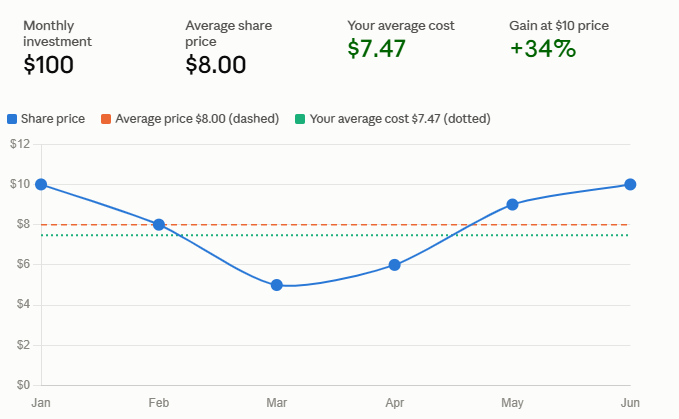
It depends on your circumstances and strategy. Investing the money at once gives the full amount market exposure immediately, while spreading purchases over time can change the timing of your market exposure. Neither approach guarantees a better outcome.
Can $500 become $1,000?
It can, but there is no guarantee. An investment must approximately double after accounting for losses, fees and taxes for $500 to become $1,000. How long that takes depends entirely on investment performance.
Is investing $500 in stocks risky?
Yes. Stocks can lose value, sometimes significantly. Risk depends on what you buy, how diversified your portfolio is and how long you can leave the money invested.
Should I invest $500 or pay off debt?
If you have high-interest debt, comparing the guaranteed cost of that debt with the uncertain return from investing is important. Your emergency savings and debt situation should be considered before investing.
How much should I invest every month after my first $500?
Choose an amount you can maintain without damaging your essential finances. Even a relatively small monthly contribution can build substantially over time when combined with long-term investing and compounding.
Is investing with $500 worth it?
Starting with $500 can be useful if it helps you establish a sustainable investing habit. The initial amount is only one part of the equation; regular contributions, time, diversification and costs can have a much larger effect over the long term.
Conclusion
Learning how to start investing with 500 dollars is less about finding a magical investment and more about building a sensible financial process.
Before investing, make sure the money is appropriate to invest, understand your time horizon and risk tolerance, choose a suitable account, research the investment and check all fees.
For many beginners, diversification can be easier through a broad investment fund than through a handful of individual stocks.
Most importantly, do not judge your progress only by what happens to your first $500. A sustainable monthly contribution and a long-term approach can turn a small beginning into a much larger investment portfolio over time.
If you are ready to begin, your next steps are simple:
- Define your investment goal.
- Check your emergency savings and high-interest debt.
- Choose the appropriate account for your country.
- Compare regulated platforms and their fees.
- Research diversified investment options.
- Invest an amount you can afford.
- Consider setting up regular contributions.
- Review your plan periodically rather than reactin