Invest in ETFs in Germany if you want a simple way to start building long-term wealth without choosing individual stocks. Exchange-traded funds allow beginners to invest in a collection of companies through a single investment. You can start with a small monthly amount, choose a diversified fund, and gradually build your portfolio.
Many beginners feel confused when they see hundreds of ETFs, different broker fees, and unfamiliar German tax rules. The good news is that you do not need an advanced financial background to understand the basics.
This complete guide explains how ETFs work, how to open an investment account, which features to compare, what costs to expect, and how German taxes may affect your returns. It also includes practical examples to help you make informed decisions.
What Are ETFs? A Simple Guide for Beginners
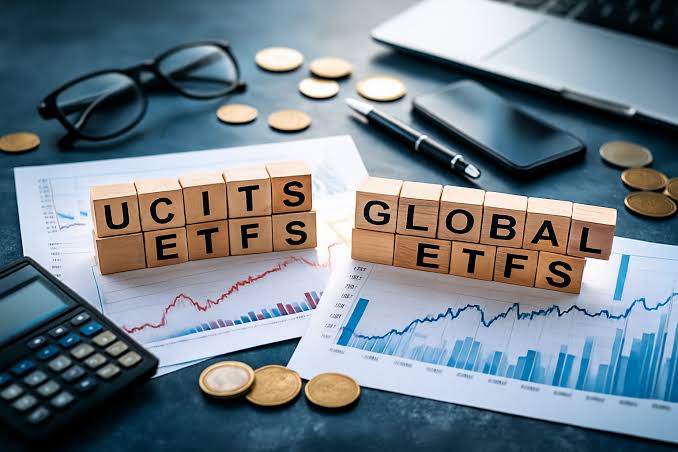
An exchange-traded fund (ETF) is an investment fund traded on a stock exchange. Many ETFs follow an index, which tracks a group of investments according to specific rules.
For example, an ETF tracking the MSCI World Index provides exposure to companies across developed markets. An S&P 500 ETF follows approximately 500 leading US companies. A broader global fund may include companies from developed and emerging markets.
Instead of purchasing shares in every company individually, you buy units of one fund.
How Do ETFs Work in Germany?
A German resident can generally purchase eligible ETFs through a securities account, commonly called a Depot. The broker provides access to available investments and handles the purchase according to your order.
You can invest in two main ways:
- Lump-sum investing: Invest a larger amount at once.
- ETF savings plan (Sparplan): Invest a fixed amount regularly, such as €50 or €100 each month.
For example, imagine you invest €100 monthly in a diversified global stock ETF. You contribute €1,200 over one year, excluding any investment gains or losses. Your portfolio value will depend on market performance and fees.
Remember that ETFs are not guaranteed savings accounts. Their prices can fall, and you could lose money.
How to Invest in ETFs in Germany: Step-by-Step Guide
Step 1: Set Your Financial Goals
Decide why you want to invest. Your goal might be retirement, buying a home in the distant future, or building long-term wealth.
Stock ETFs are generally better suited to long investment periods because markets can experience significant short-term declines. Money needed soon is usually better kept in an appropriate lower-risk savings option.
Before investing, consider building an emergency fund and paying attention to expensive debt.
Step 2: Choose a Regulated ETF Broker
You need a broker that offers a securities account and access to your chosen ETF. Compare the following features:
- Account and custody fees
- ETF savings plan charges
- Trading commissions
- Available funds and exchanges
- Automatic tax reporting and withholding
- Customer support and account security
Examples worth researching include Trade Republic and Scalable Capital. Their available services, eligibility requirements, and fees can change, so check their current terms before opening an account.
If you live in Germany, confirm that the broker accepts your residency status and supports the account and tax arrangements you need.
Step 3: Open Your Securities Account
Most online brokers allow you to apply through a website or mobile app.
You may need to provide:
- Identification documents
- Your residential address
- Tax identification information
- Bank account details
- Information required for identity verification
Complete the verification process and read the account terms carefully. If you are a US citizen or another foreign taxpayer living in Germany, ask the broker whether additional tax documentation is required.
Step 4: Choose the Right ETF
Do not choose a fund only because it recently performed well. Compare its investment strategy, diversification, costs, and risks.
Important factors include:
- Index: Does the fund follow a global, European, US, or sector-specific index?
- TER: The total expense ratio estimates the fund’s annual operating costs.
- Fund size: Larger funds may offer practical advantages, although size alone does not guarantee quality.
- Replication: The ETF may hold securities directly or use a synthetic method.
- Distribution policy: It may reinvest income or pay distributions to investors.
- Domicile: The fund’s legal home can affect its tax treatment and administration.
The German consumer advice service provides additional guidance on selecting ETFs.
Step 5: Make Your First Investment
Search for your chosen fund using its name or ISIN, a unique identification code. Check the fund details before placing an order.
You can usually choose between a one-time purchase and a recurring savings plan. A savings plan can make investing easier because contributions happen automatically according to your instructions.
For example, a beginner with €75 available each month could set up a €75 savings plan in an eligible diversified ETF, provided the broker supports that amount.
Step 6: Monitor Your Portfolio
Review your investments periodically instead of reacting to every market movement. Check whether your financial goals, risk tolerance, and monthly budget have changed.
Avoid buying and selling simply because headlines predict a market crash. A long-term strategy should be based on your needs, not short-term excitement or fear.
Best ETF Features to Compare in Germany
| Feature | What to check | Why it matters |
|---|---|---|
| Index | Global, US, European or sector-specific | Determines your exposure |
| TER | Annual fund operating cost | Affects long-term returns |
| Diversification | Number and range of holdings | Helps spread company-specific risk |
| Distribution | Accumulating or distributing | Determines how income is handled |
| Replication | Physical or synthetic | Explains how the index is tracked |
| Fund domicile | Country where the fund is established | May affect tax treatment |
| Savings plan | Minimum amount and execution fees | Helps with regular investing |
A diversified global equity ETF may suit investors seeking broad stock-market exposure. An S&P 500 ETF concentrates on US large-cap companies, while a sector ETF focuses on a narrower part of the market.
No single ETF is best for every investor.
Pros and Cons of Investing in ETFs in Germany
Advantages of ETF Investing
- Diversification: One fund can provide exposure to many companies.
- Accessible investing: Some brokers offer ETF savings plans from very small amounts.
- Transparent costs: The TER and trading fees can usually be checked before investing.
- Convenience: Automated contributions reduce the need to place orders manually.
- Flexible choices: Investors can select funds focused on global markets, bonds, or particular regions.
Disadvantages of ETF Investing
- Market risk: Your investment can lose value during a downturn.
- No guaranteed returns: Historical performance does not predict future results.
- Tax complexity: German residents may need to understand withholding taxes and fund-specific rules.
- Currency exposure: International holdings can be affected by exchange-rate changes.
- Limited control: An index ETF follows its index rather than allowing you to select every holding.
ETFs reduce some risks through diversification, but they do not remove investment risk.
ETF Performance: What Can Beginners Expect?
ETF performance depends on the underlying assets, investment period, fees, and market conditions. A stock ETF may perform strongly in one year and fall sharply in another.
The following table illustrates a hypothetical investment of €1,000 under different annual return assumptions. It is not a forecast.
| Hypothetical annual return | Value after one year | Gain or loss |
|---|---|---|
| +8% | €1,080 | +€80 |
| +3% | €1,030 | +€30 |
| 0% | €1,000 | €0 |
| -10% | €900 | -€100 |
| -20% | €800 | -€200 |
These examples exclude taxes, fund expenses, trading costs, and inflation. Actual returns can be higher or lower.
A Real-World Investing Example
Suppose Maria lives in Berlin and wants to invest for retirement over 20 years. She decides to contribute €100 monthly to a diversified global stock ETF.
Her total contributions would equal €24,000 over 20 years. Her final portfolio value would depend on the timing of her contributions, market returns, and investment costs.
If Maria instead needs the money for a house deposit in two years, a stock ETF may be too risky for that goal. A market decline shortly before the purchase could reduce the amount available.
The lesson is simple: match your investment to your time horizon and ability to accept losses.
ETF Investing Costs and Pricing in Germany
ETF costs include more than the advertised trading commission. Review the full cost information before making a purchase.
| Cost | Typical explanation | Example |
|---|---|---|
| Account fee | Charge for maintaining the securities account | Some brokers charge €0 |
| Savings plan fee | Charge for each scheduled purchase | Some plans cost €0 |
| One-time trade fee | Commission for an individual order | Depends on the broker |
| ETF TER | Annual fund operating expenses | A 0.20% TER equals about €2 yearly per €1,000 invested, before changes in value |
| Spread | Difference between buying and selling prices | Varies by ETF and market conditions |
| Taxes | Tax on applicable investment income | Depends on your tax situation |
For example, Scalable Capital advertises savings plan executions without an execution fee under its listed broker plans. Trade Republic also advertises commission-free savings plan executions, although other costs can apply. Check the current official Scalable Capital fee schedule and Trade Republic pricing before investing.
A low headline fee does not necessarily mean the lowest overall cost. Compare the spread, fund expenses, and order conditions as well.
German ETF Taxes: What Beginners Need to Know
German tax rules are an important part of investing. For eligible German tax residents, investment income may be subject to capital income tax, the solidarity surcharge, and, where applicable, church tax.
A statutory savings allowance, called the Sparer-Pauschbetrag, may apply to eligible investment income. Investors can generally submit a Freistellungsauftrag to a participating German broker to use their allowance there.
German investment-fund rules can also include a Vorabpauschale, a deemed advance taxable amount that may apply to certain accumulating and distributing funds. Eligible equity funds may qualify for partial tax exemption, subject to the applicable requirements.
Tax handling depends on your residency, the fund, and your individual circumstances. Foreign investors and US citizens living in Germany may face additional reporting obligations.
Check the German Federal Central Tax Office and seek qualified tax advice if your situation involves more than one country.
Common ETF Investing Mistakes to Avoid
Beginners can improve their investing process by avoiding a few common errors:
- Investing money they will need for essential expenses.
- Choosing a fund only because its recent returns look impressive.
- Ignoring the TER, spread, and broker charges.
- Buying several ETFs that hold many of the same companies without understanding the overlap.
- Selling in panic during a temporary market decline.
- Assuming every ETF receives identical tax treatment.
- Investing without checking whether the broker supports their residency and tax status.
A simple, affordable portfolio that matches your goals can be easier to maintain than a complicated collection of funds.
FAQs About Investing in ETFs in Germany
1.How much money do I need to start investing in ETFs in Germany?
The minimum depends on your broker and chosen fund. Some German brokers offer savings plans from €1, while others set different minimums. Start with an amount you can afford to invest regularly without affecting essential expenses.
2.Which ETF is best for beginners in Germany?
A low-cost, broadly diversified global equity ETF can be a useful starting point for someone with a long time horizon and the ability to tolerate market losses. Compare the index, TER, fund structure, and tax considerations before choosing.
3.Are ETFs taxed in Germany?
Yes, applicable ETF income may be taxable. Depending on the investor and fund, taxes can involve distributions, realized gains, and the annual Vorabpauschale. Allowances and partial exemptions may apply.
4.Can US citizens invest in ETFs while living in Germany?
Possibly, but they must consider both German and US tax rules. US taxpayers can face special restrictions and reporting requirements involving non-US investment funds. They should seek cross-border tax advice before purchasing a German or European ETF.
5. Is ETF investing safe for beginners?
ETFs can offer diversification, but they are not risk-free. Stock-market ETFs can lose substantial value, especially over short periods. Investors should understand the fund, maintain emergency savings, and choose an investment period that fits their financial goals.
Conclusion
For many beginners investing for the long term, a low-cost, broadly diversified ETF combined with a suitable German broker and a manageable monthly savings plan can be a practical approach.
Investors who want broad global exposure may prefer a worldwide stock-market ETF. Those who specifically want exposure to large US companies may consider an S&P 500 ETF, while understanding its narrower geographic focus.
The best choice depends on your goals, time horizon, risk tolerance, total costs, and tax situation. Start with research, compare available funds, and invest only money you can leave invested for an appropriate period.
Important: This article is educational and not personalized financial or tax advice. ETF prices can rise or fall, and you may lose money.