Learn how to Invest in S&P 500 funds can be a simple way for UK investors to gain exposure to some of the world’s largest companies. Instead of choosing individual American stocks such as Apple, Microsoft, Amazon, or Nvidia, you can buy one fund that tracks the S&P 500 index.
The S&P 500 represents 500 leading large-cap U.S. companies. It covers major areas of the American economy, including technology, healthcare, financial services, consumer companies, and industrial businesses. For a UK investor, the process can look confusing at first.
You need to choose an investment platform, understand ETFs, decide between a Stocks and Shares ISA and a general investment account, and consider currency exchange. A typical UK investor could open a Stocks and Shares ISA, search for an S&P 500 UCITS ETF, invest a fixed amount each month, and hold it for the long term. How to Invest in S&P 500 Singapore – ETFs and Index Funds.
What Is the S&P 500?
The S&P 500 is a U.S. stock market index containing around 500 large companies. It is maintained by S&P Dow Jones Indices and is widely used as a benchmark for the U.S. stock market.
You cannot directly buy the index itself. You buy an investment fund or ETF designed to track it.
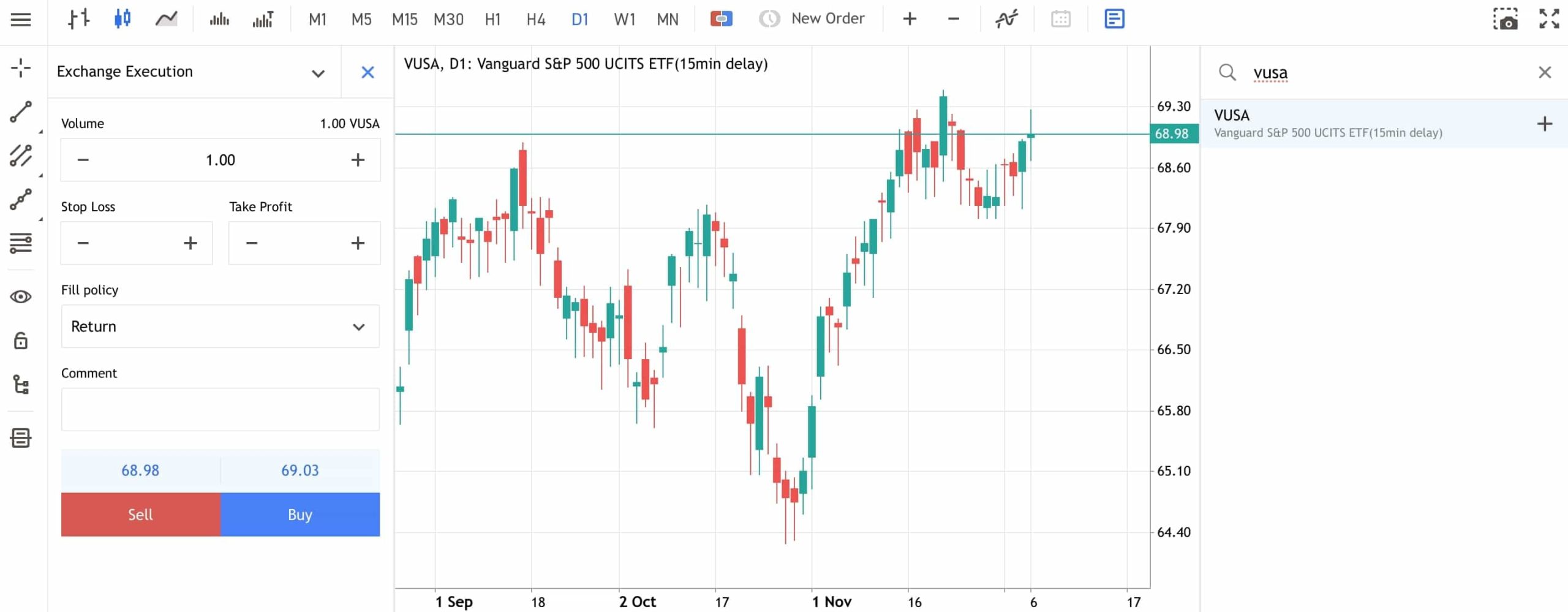
A popular UK example is the Vanguard S&P 500 UCITS ETF (VUAG). Vanguard says the fund uses a passive investment approach and physically acquires securities to track the S&P 500. Its current ongoing cost figure is 0.07%.
An ETF can contain hundreds of companies inside one investment. That gives an investor diversification without buying hundreds of individual shares.
What Companies Are Inside the S&P 500?
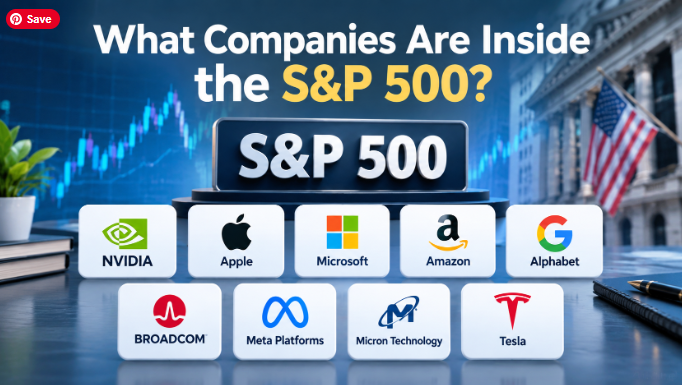
The index includes major U.S. businesses such as:
- Apple
- Microsoft
- Amazon
- Nvidia
- Alphabet
- Meta Platforms
- Berkshire Hathaway
- JPMorgan Chase
- Johnson & Johnson
- Coca-Cola
The exact companies and their weightings change over time.
This makes the S&P 500 different from buying one company. If one company performs badly, it does not automatically destroy the entire investment.
How to Invest in the S&P 500 From the UK Step by Step
Step 1: Choose an Investment Account
UK investors normally have two common choices:
Stocks and Shares ISA: Investment growth and income inside the ISA are generally free from UK Income Tax and Capital Gains Tax. The ISA allowance is £20,000 for the 2026/27 tax year.
General Investment Account: There is no ISA contribution limit, but taxable investment income and capital gains may need to be considered.
For many long-term investors, a Stocks and Shares ISA is an attractive starting point because of its tax advantages. how to invest in s&p 500 for beginners
Step 2: Choose a UK Investment Platform
Open an account with a regulated UK investment platform that provides access to London-listed ETFs.
Compare:
- Platform fees
- Trading fees
- Foreign exchange charges
- ETF availability
- Regular investing options
- Account administration
- Customer support
Do not choose a platform only because its trading fee is low. A platform with a higher dealing fee can still be cheaper overall if its currency and account charges are lower.
Step 3: Search for an S&P 500 UCITS ETF
Search the platform for an ETF that tracks the S&P 500.
Common details to check include:
- Fund name
- Ticker
- ISIN
- Ongoing fund cost
- Accumulation or distribution
- Currency
- Exchange listing
- Fund size
- Tracking method
For example, VUAG is the accumulating Vanguard S&P 500 UCITS ETF. Vanguard currently lists an ongoing cost figure of 0.07%.
Step 4: Choose Accumulating or Distributing
An accumulating ETF automatically reinvests dividends inside the fund.
A distributing ETF pays dividends to you as cash.
Example:
Imagine your S&P 500 ETF receives dividends from the companies it owns. An accumulating fund reinvests those dividends rather than sending the money to your investment account.
For someone focused on long-term growth, accumulation can be convenient.
Step 5: Decide How Much to Invest
You do not need thousands of pounds to start.
Example:
A UK investor earning £2,500 per month might decide to invest £200 per month into an S&P 500 ETF.
That is £2,400 per year.
Another investor may have £10,000 available and choose to invest a lump sum.
The right amount depends on your income, emergency savings, debt, investment timeframe, and tolerance for market losses. how to invest in s&p 500 for beginners
Place the ETF Order
Once your account is funded:
- Search for the chosen S&P 500 ETF.
- Check the ticker and fund details.
- Enter the amount or number of units.
- Review the dealing cost.
- Place the order.
- Confirm the transaction.
- Keep investing according to your plan.
Do not confuse an S&P 500 ETF with a leveraged or inverse ETF. A standard index-tracking ETF is generally the simpler product for a long-term investor.
Keep Investing for the Long Term
The S&P 500 can rise sharply and fall sharply.
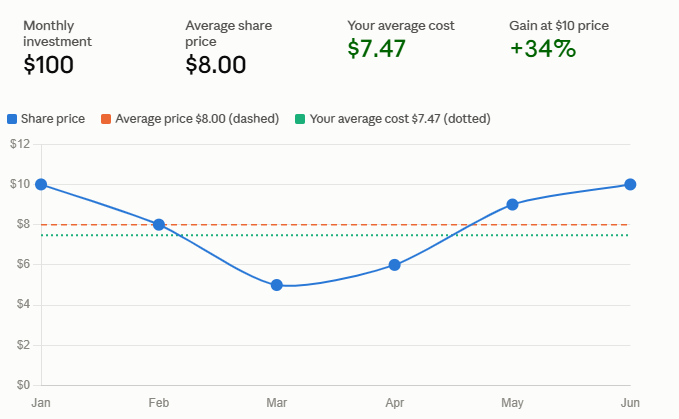
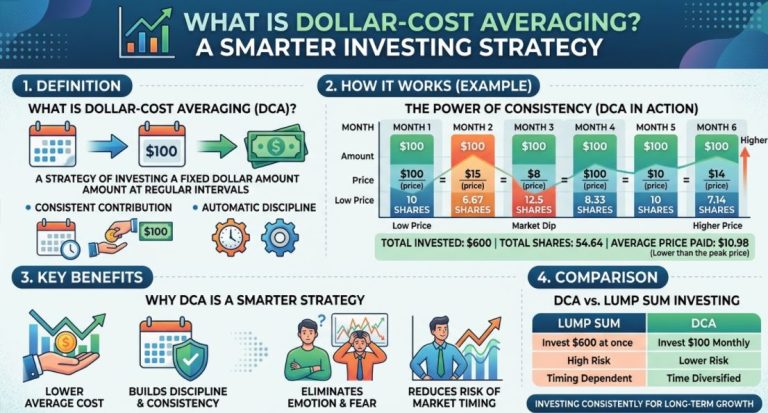
A regular monthly investment strategy can help reduce the pressure of trying to predict the perfect entry point.
Example:
If the market falls 15% after you invest, your account value will decline. New monthly contributions can buy ETF units at lower prices. If the market later recovers, those lower-priced purchases can contribute to the recovery.
There is no guarantee that the market will recover quickly.
S&P 500 Features Comparison
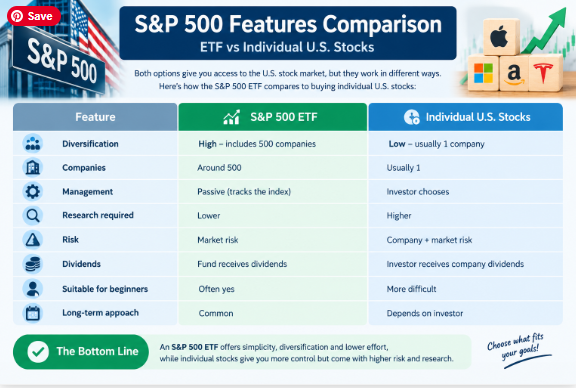
| Feature | S&P 500 ETF | Individual U.S. Stocks |
|---|---|---|
| Diversification | High | Low |
| Companies | Around 500 | Usually 1 |
| Management | Passive | Investor chooses |
| Research required | Lower | Higher |
| Risk | Market risk | Company + market risk |
| Dividends | Fund receives dividends | Investor receives company dividends |
| Suitable for beginners | Often yes | More difficult |
| Long-term approach | Common | Depends on investor |
S&P 500 Pros and Cons for UK Investors
Pros
- Exposure to hundreds of major U.S. companies
- Simple way to access the American stock market
- Low-cost index ETFs are available
- Can be held inside a Stocks and Shares ISA
- No need to research hundreds of companies individually
- Regular monthly investing is possible
- Strong long-term historical performance
Cons
- The value can fall substantially
- Past performance does not guarantee future returns
- Currency movements affect UK investors
- The index is heavily influenced by large technology companies
- U.S. market valuations can become expensive
- An S&P 500 investment does not cover the entire global stock market
- Investment platform and dealing fees can reduce returns
S&P 500 Historical Performance
The S&P 500 has experienced both strong gains and major declines.
| Year | S&P 500 Total Return |
|---|---|
| 2020 | 18.40% |
| 2021 | 28.71% |
| 2022 | -18.11% |
| 2023 | 26.29% |
| 2024 | 25.02% |
| 2025 | 17.88% |
S&P Dow Jones Indices reported a 17.88% total return for the S&P 500 in 2025, including dividends. The index also recorded a negative 18.11% total return in 2022.
The numbers show why investors should not expect the market to deliver the same return every year.
A £10,000 investment does not automatically become £11,788 every year. A year of strong growth can be followed by a major decline.
S&P 500 Investment Pricing and Costs
The fund itself is only one part of the cost.
| Cost | Typical consideration |
|---|---|
| ETF ongoing cost | Varies by fund |
| Example VUAG OCF/TER | 0.07% |
| Platform fee | Varies by provider |
| Dealing fee | Varies by provider |
| Currency conversion | Varies by provider |
| Stocks & Shares ISA | Provider-dependent |
| UK tax inside ISA | Investment gains and income generally tax-free |
Vanguard currently lists VUAG’s ongoing cost figure at 0.07%.
For a £10,000 investment, a 0.07% annual fund cost is approximately £7 for one year, assuming the investment value stays at £10,000. This is only an illustration; the actual cost changes as the fund value changes.
UK tax rules also matter. Investments held inside a Stocks and Shares ISA are generally sheltered from UK tax on investment income and capital gains.
Outside an ISA, capital gains and dividends can have tax consequences. For 2026/27, the Capital Gains Tax annual exempt amount for individuals is £3,000, while the dividend allowance is £500.
Investors should check current HMRC rules before making decisions.
UK Tax and Currency Considerations
The S&P 500 is made up of U.S. companies, so currency matters.
Suppose the S&P 500 rises 10% in U.S. dollar terms. If the pound strengthens significantly against the dollar during the same period, a UK investor’s return measured in pounds may be lower.
The opposite can also happen.
This is an important point for UK investors that is easy to overlook when looking only at the index’s U.S. dollar performance.
Tax treatment also depends on the account and investment.
A Stocks and Shares ISA can remove much of the UK tax administration because qualifying investment income and capital gains inside the ISA are generally tax-free.
A General Investment Account does not provide the same shelter.
UK investors should also check whether an ETF is a UCITS fund available to UK retail investors rather than simply searching for the U.S.-listed version of an ETF.
S&P 500 vs Other Investment Choices
The S&P 500 is not automatically the best investment for every person.
A global index fund gives exposure to companies outside the United States.
A FTSE 100 fund focuses on large UK companies.
A bond fund can provide different risk characteristics from equities.
An investor with a 20-year timeframe and high risk tolerance may view an S&P 500 ETF differently from someone who needs the money within two years.
The biggest question is not only, “Can I invest in the S&P 500?”
It is, “Does the S&P 500 fit my overall investment plan?”
FAQs About Investing in the S&P 500 From the UK
1. Can I invest in the S&P 500 from the UK?
Yes. UK investors can gain S&P 500 exposure through eligible ETFs and index funds available through UK investment platforms.
Can I buy the S&P 500 inside a Stocks and Shares ISA?
Yes. Eligible funds and ETFs can be held in a Stocks and Shares ISA. The overall ISA allowance is £20,000 for the 2026/27 tax year.
How much money do I need to invest in the S&P 500?
There is no single required amount. Some platforms allow regular investments with relatively small amounts. Your minimum depends on the platform, ETF price, and whether fractional investing is available.
Is investing in the S&P 500 risky?
Yes. It is a stock-market investment. The index has experienced major declines, including an 18.11% total-return fall in 2022.
Is the S&P 500 good for long-term investing?
It can be suitable for investors seeking long-term exposure to large U.S. companies and who can accept stock-market volatility. It should be considered as part of an overall financial plan rather than a guaranteed source of returns.
Conclusion: Who Wins With the S&P 500?
The S&P 500 can be a strong choice for UK investors who want long-term exposure to some of the world’s largest U.S. companies without choosing individual stocks. It offers diversification, simple investing, and the potential for long-term growth.
For beginners, a low-cost S&P 500 ETF can make investing easier because one investment gives you exposure to hundreds of companies. Using a Stocks and Shares ISA can also make the process more tax-efficient under UK rules.
However, the S&P 500 is not risk-free. The market can fall sharply, and your investment can lose value in the short term. Currency movements between the pound and U.S. dollar can also affect your returns.
So, who wins? The S&P 500 is best suited to investors who have a long-term mindset, can handle market ups and downs, and want a simple way to invest in large U.S. companies. If that sounds like you, investing in an S&P 500 ETF could be a practical starting point.
The key is to choose a suitable platform, understand the costs, invest consistently, and focus on your long-term goals rather than short-term market movements.