
VPN vs Proxy ek aisa topic hai jo bohat se logon ko confuse karta hai. Dono tools aap ki IP address ko hide kar sakte hain, lekin dono ek jese nahi hain. Agar aap online privacy, secure browsing, ya public Wi-Fi par apni information ko safe rakhna chahte hain, to VPN aur Proxy ke darmiyan farq samajhna zaroori hai. Best Free VPNs That Actually Protect Your Privacy
Is guide mein hum simple words mein samjhayenge ke VPN aur Proxy kya hain, kaise kaam karte hain, aur aap ke liye konsa option behtar ho sakta hai.
What Is a VPN?
A Virtual Private Network (VPN) creates an encrypted connection between your device and a secure server.
When you connect to a VPN:
- Your internet traffic is encrypted.
- Your real IP address is hidden.
- Your internet provider cannot easily view your browsing activity.
- Public Wi-Fi connections become more secure.
VPNs are commonly used for:
- Online privacy
- Public Wi-Fi security
- Remote work
- Secure browsing
- Streaming and geo-restricted content
What Is a Proxy Server?
A proxy server acts as an intermediary between your device and the websites you visit.
Instead of connecting directly to a website, your request first passes through the proxy server.
A proxy can:
- Hide your IP address
- Change your virtual location
- Help bypass certain restrictions
- Improve network management
However, most proxy servers do not encrypt your internet traffic.
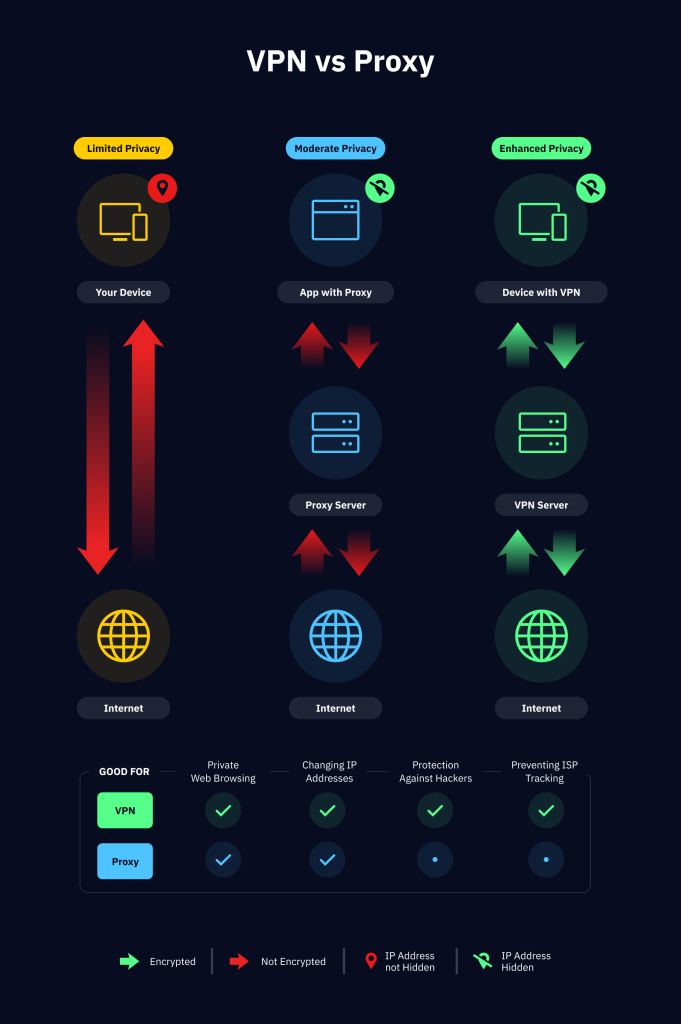
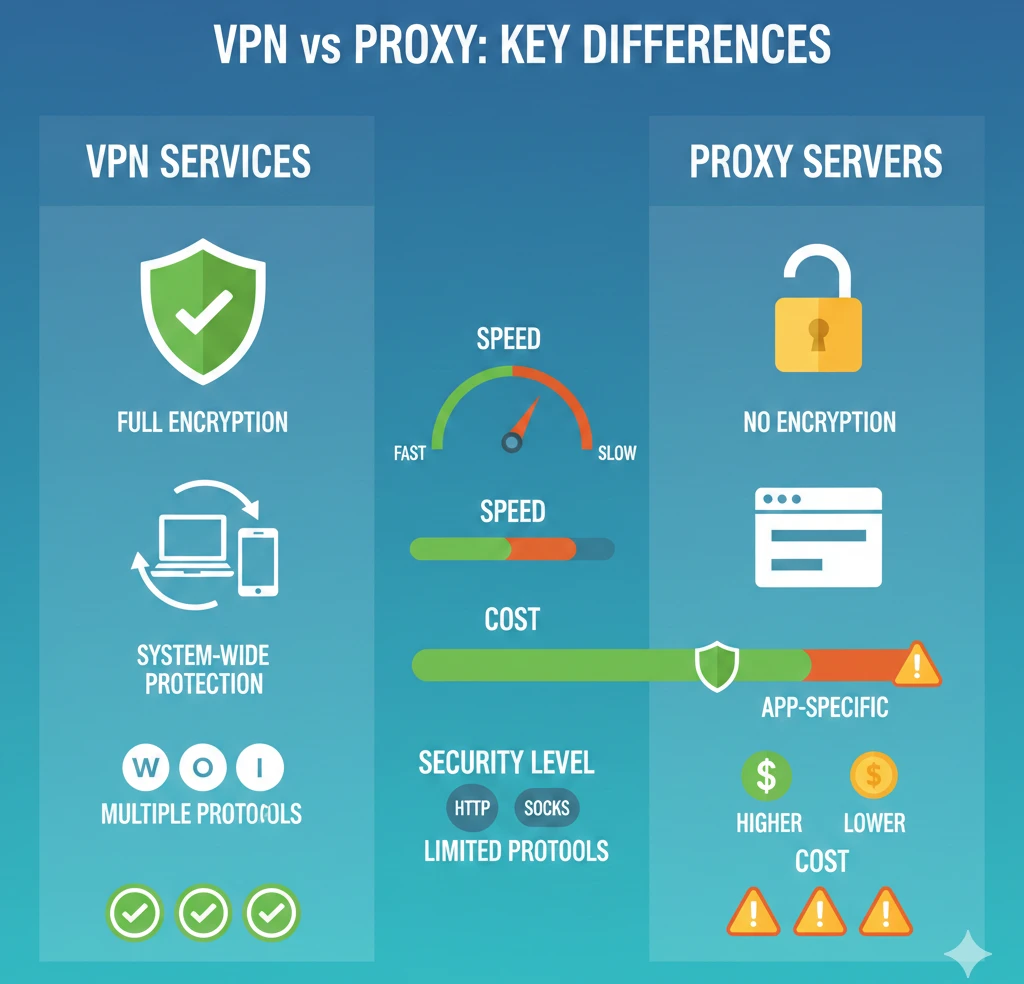
VPN vs Proxy: Key Differences
VPN vs Proxy Security Comparison
The biggest difference between a VPN and a proxy is security.
A VPN encrypts your internet connection, making it difficult for hackers, advertisers, or third parties to monitor your activity.
Most proxies simply route traffic through another server without encryption.
Winner for Security
VPN
VPN vs Proxy Privacy Comparison
If privacy is your goal, a VPN generally provides stronger protection.
VPN providers often offer:
- Encrypted connections
- DNS leak protection
- Kill switches
- No-log policies
Proxy servers typically hide only your IP address.

Winner for Privacy
VPN
VPN vs Proxy Speed Comparison
Because VPNs encrypt traffic, they may introduce a slight reduction in speed.
Proxies usually process less data and may feel faster in some situations.
Winner for Speed
Proxy (in some cases)
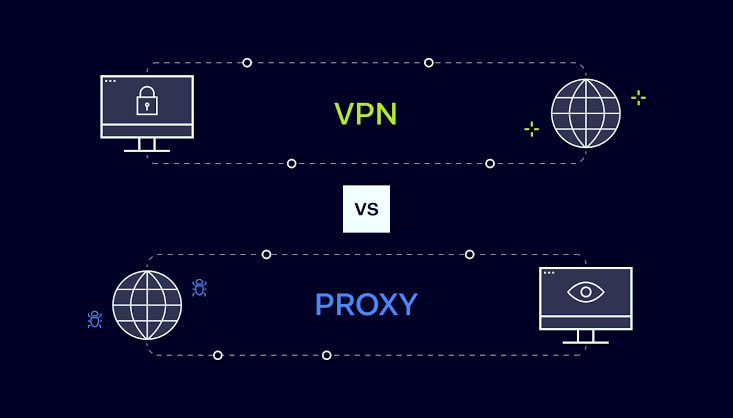
VPN vs Proxy for Streaming
Many users want to access content available in different regions.
Both VPNs and proxies can change your virtual location.
However, VPNs generally provide:
- Better connection stability
- Stronger privacy
- Better compatibility with streaming services
Winner for Streaming
VPN
VPN vs Proxy for Public Wi-Fi
Public Wi-Fi networks can expose your data to security risks.
A VPN encrypts your connection, helping protect:
- Passwords
- Banking information
- Personal data
Most proxies do not provide this protection.
Winner for Public Wi-Fi
VPN
VPN vs Proxy Comparison Table
| Feature | VPN | Proxy |
|---|---|---|
| Hides IP Address | Yes | Yes |
| Encrypts Traffic | Yes | Usually No |
| Privacy Protection | High | Basic |
| Public Wi-Fi Security | Yes | No |
| Streaming Support | Better | Limited |
| Speed | Slightly Slower | Usually Faster |
| Device Protection | Entire Device | Specific Applications |
| Security Level | High | Low to Moderate |
Pros and Cons of Using a VPN
Pros
- Strong encryption
- Better privacy
- Secure public Wi-Fi usage
- Protects all device traffic
- Improved online security
Cons
- Can slightly reduce speed
- Premium VPNs often require subscriptions
- Some services block VPN traffic
Pros and Cons of Using a Proxy
Pros
- Easy to set up
- Often faster than VPNs
- Useful for simple IP masking
- Good for basic browsing tasks
Cons
- Usually no encryption
- Lower privacy protection
- Limited security features
- Does not protect all traffic
When Should You Use a VPN?
A VPN is usually the better option when:
- Using public Wi-Fi
- Protecting sensitive information
- Working remotely
- Online banking
- Improving privacy
When Should You Use a Proxy?
A proxy may be sufficient when:
- You only need to hide your IP address
- Security is not your main concern
- You need quick location switching
- You are managing network traffic
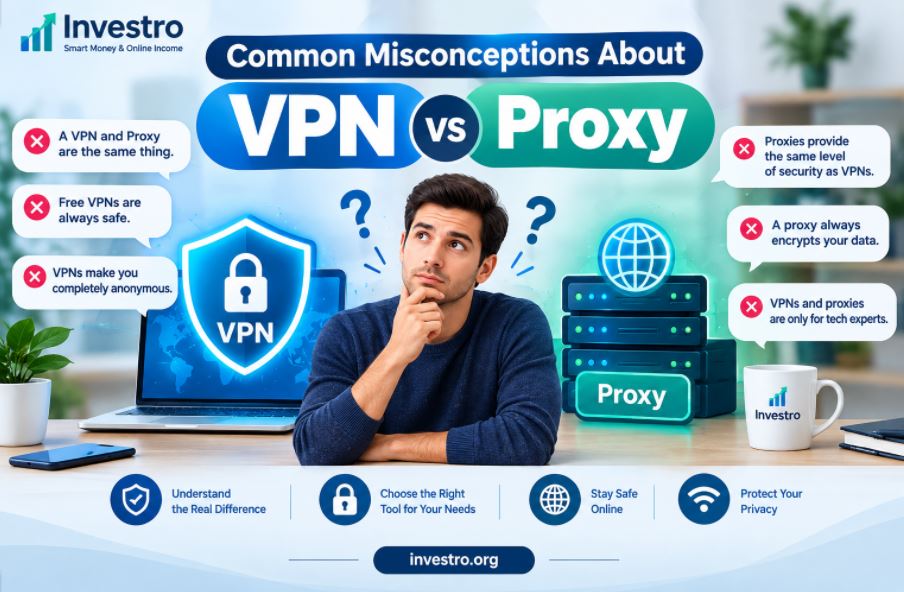
Common Misconceptions About VPN vs Proxy
“A Proxy Is the Same as a VPN”
This is false.
While both can hide your IP address, VPNs add encryption and stronger privacy protections.
“Free Proxies Are Always Safe”
Not necessarily.
Some free proxy services may log user activity or inject advertisements.
“VPNs Make You Completely Anonymous”
No tool can guarantee complete anonymity online.
VPNs improve privacy but should be combined with good security practices.
Author / Expertise Note
This article is for educational purposes only and does not constitute cybersecurity, legal, or technical advice. Readers should verify VPN and proxy service features directly with providers before making decisions regarding online privacy and security.
FAQs
Is a VPN better than a proxy?
A VPN generally provides stronger privacy and security because it encrypts your internet traffic.
Can a proxy hide my IP address?
Yes. Most proxy servers can hide your real IP address from websites.
Do VPNs slow down internet speed?
VPNs may slightly reduce speed because traffic is encrypted and routed through secure servers.
Is a free proxy safe?
Some are safe, but many lack privacy protections and security features.
Can I use a VPN and a proxy together?
Yes. Advanced users sometimes combine both, though most people only need one solution.
Which is better for streaming?
VPNs generally offer better compatibility and security for streaming services.
Does a proxy encrypt internet traffic?
Most proxies do not encrypt traffic, which is one of the main differences between VPN vs Proxy.
Conclusion
Understanding VPN vs Proxy helps you choose the right tool for your online needs. Both options can hide your IP address, but VPNs provide additional encryption and stronger privacy protections. If security and privacy are important, a VPN is often the more comprehensive solution. If you only need basic IP masking, a proxy may be sufficient. The best choice depends on your goals, browsing habits, and security requirements.